
Daily Weird News Report
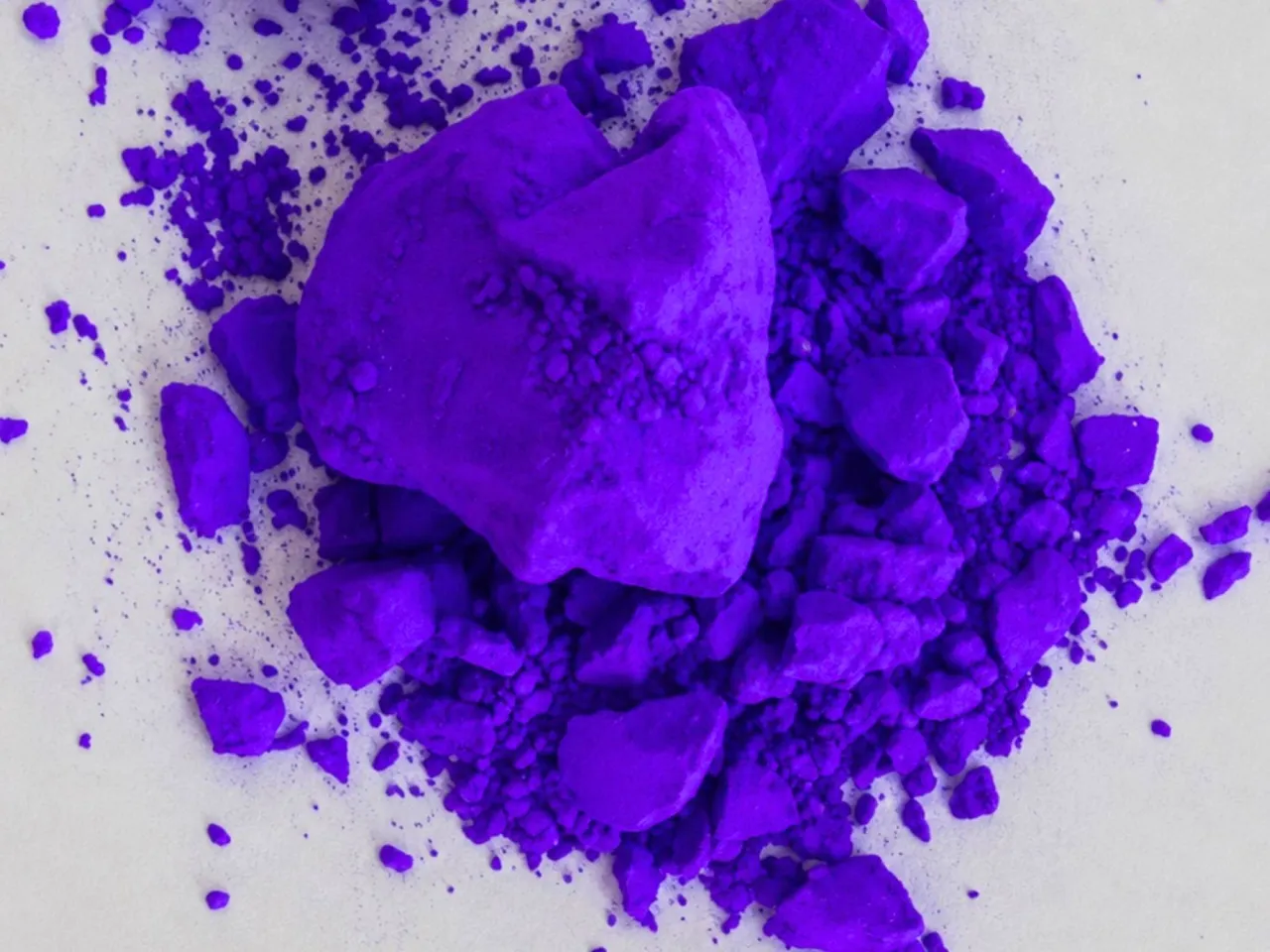
White clothing has long had a simple advantage in hot weather: it reflects a broad range of sunlight. But a new purple textile developed by researchers from Zhengzhou University, Adelaide University, the University of South Australia, and Central China Normal University could challenge that assumption.
The material combines a cobalt-based metal-organic framework called ZIF-67 with zinc oxide nanoparticles. Using a single-step electrospinning process, the researchers incorporated the materials into thermoplastic polyurethane fibers, producing a fabric with a bright purple appearance.
According to the research described by New Atlas, the textile reflects nearly 88% of incoming sunlight while emitting slightly more than 96% of its radiation in the mid-infrared range. Those properties allow it to reflect much of the sun’s energy while releasing heat rather than retaining it. The zinc oxide component also enables the material to absorb near-ultraviolet light.
That combination is notable because purple pigments would ordinarily be expected to absorb some of the solar wavelengths that contribute to heating. The ZIF-67 structure instead reflects strongly in the near-infrared range and emits heat efficiently in the mid-infrared range, according to the report.
In outdoor tests conducted on a sunny day in Zhengzhou, China, five-centimeter-square pieces of the purple fabric reduced temperatures by 5.6 degrees Celsius. Comparable pieces of white polyurethane lowered temperatures by 3.1 degrees Celsius. At night, the purple material produced a 3.4-degree reduction, compared with 1.2 degrees for the white fabric.
The researchers also reported that the textile repelled water and maintained its cooling performance after 50 washing cycles. The work was published in the journal Small.
The team says the approach could eventually be adapted to produce cooling textiles in colors beyond purple. Materials engineer Jun Ma said the research demonstrates that appearance and cooling performance do not necessarily have to be traded against each other, while Adelaide University PhD candidate Yangzhe Hou described expanding the color range as a long-term opportunity.
/https://tf-cmsv2-smithsonianmag-media.s3.amazonaws.com/filer_public/e5/61/e561f163-9c70-442d-b379-f78f81765787/rock-painting.jpg)