
Daily Weird News Report
Archaeologists working at Saqqara, the ancient necropolis of Memphis, have uncovered a 4,000-year-old tomb containing a false door—an architectural feature that was not meant to provide physical passage—as well as other funerary objects, Egyptian officials announced last week.
Hieroglyphic inscriptions identify the tomb’s owner as Sekhentiu-Ptah, a high-ranking official who held several positions in the royal administration. According to a statement from Egypt’s Ministry of Tourism and Antiquities, his roles included royal chamberlain, supervisor of the king’s works, supervisor of royal documents, priest of the goddess Maat and supervisor of scribes.
The false door was located inside the tomb alongside an offering table and a purification basin. Ancient Egyptians often believed that the deceased could use such doors to move freely between the tomb and the afterlife, according to the Metropolitan Museum of Art.
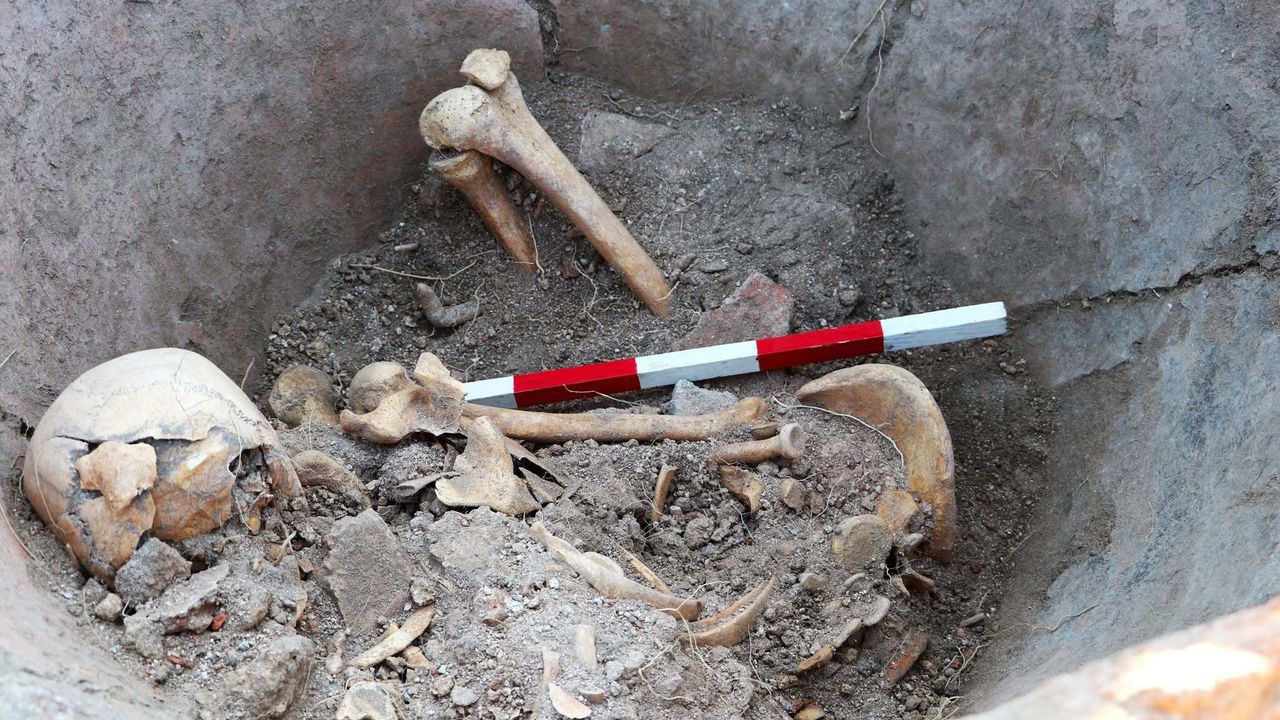
The excavation, conducted west of Saqqara’s Bubasteion necropolis, also revealed a network of burial shafts. Some had been looted in antiquity, but archaeologists still found human remains and funerary objects among them. The finds included more than 100 faience ushabti figurines—small statues traditionally placed with the dead to serve them in the afterlife.
Saqqara lies about 20 miles south of Cairo and was used for burials over a long period. During Egypt’s Old Kingdom, roughly 2700 to 2200 B.C.E., it served as a burial ground for royals and other members of the elite. The site continued to be used in later generations, including during the Roman era.
The ministry said the discoveries may help researchers examine how the necropolis was used across different periods. The latest excavation is part of continuing archaeological work at the UNESCO World Heritage Site, which has produced tombs, inscriptions and burial objects from many eras of ancient Egyptian history.
The announcement follows another Saqqara discovery reported last year: a 4,100-year-old burial chamber that officials believe may have belonged to a royal doctor who treated Egyptian rulers.