Daily Weird News Report
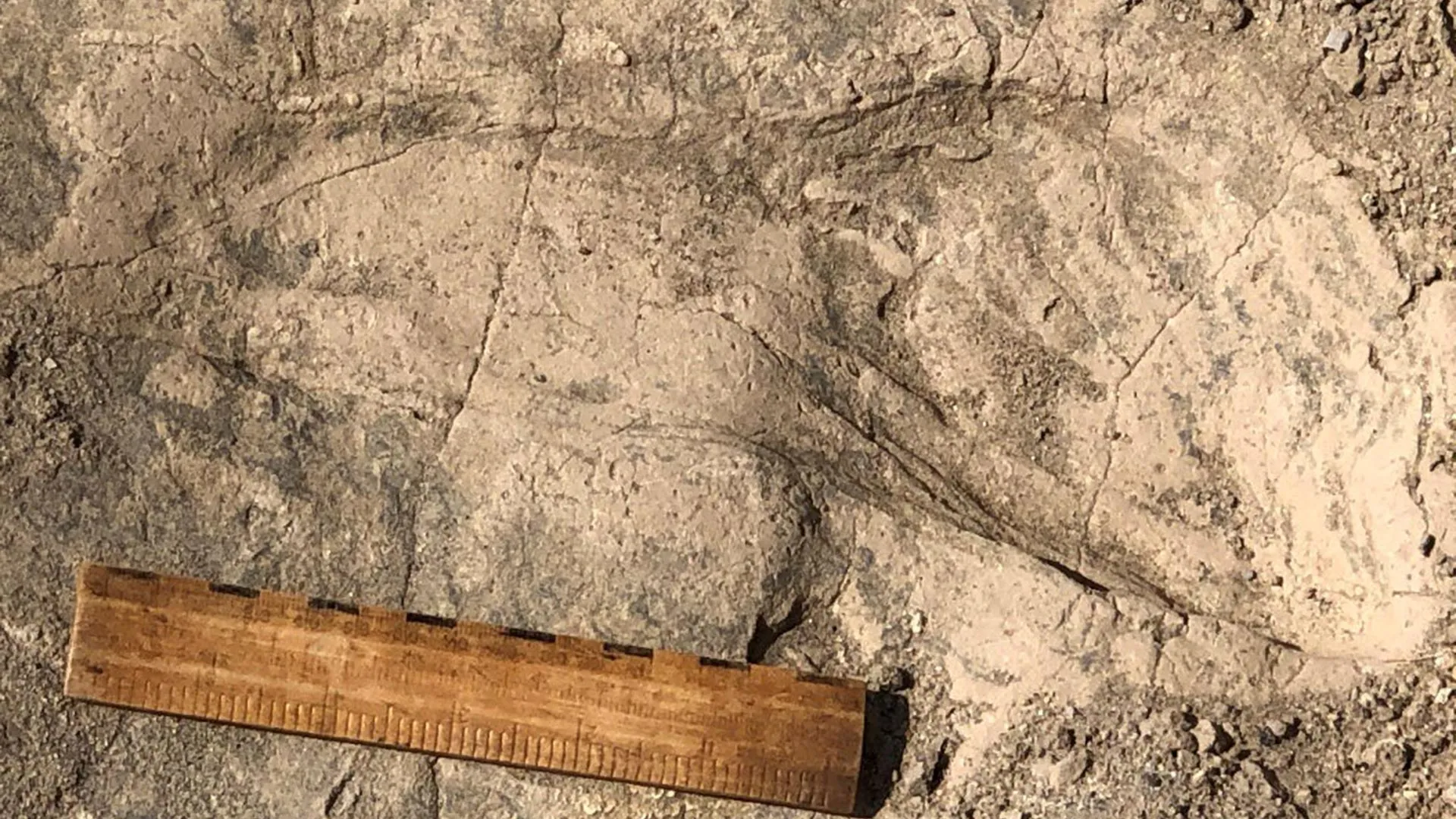
A fossil footprint trail in northern Kenya is giving researchers an unusually close look at the behavior and physical size of Paranthropus boisei, an extinct human relative that lived about 1.4 million years ago.
According to research reported by ScienceDaily from the Max Planck Institute for Evolutionary Anthropology, the tracks were preserved near an ancient lakeshore and appear to have been made by eight individuals passing through the same area at roughly the same time. Because footprints can form and survive over a short interval, they can record a moment of movement in a way that accumulated skeletal remains generally cannot.
Researchers identified the tracks as belonging to P. boisei using an analytical approach developed by the team in 2024. Their assessment considered both the anatomy of the footprints and the way the trackmakers moved. All eight individuals were judged likely to have been adults.
The dimensions of several tracks indicate body sizes larger than some earlier estimates based on the species’ limited skeletal remains. Lead author Kevin Hatala said the footprints point to individuals as tall as 1.8 meters and weighing around 75 kilograms. Much of what is known from P. boisei fossils comes from skulls with large jaws and teeth, while evidence of the rest of the body is comparatively scarce.
The tracks may also contain clues about social behavior. Most of the individuals appear to have been adult males, with no clear signs of females or children in the trail. Co-author Neil Roach said the group pattern could be consistent with a more complex social structure, although the footprints do not establish how the individuals interacted.
The discovery forms part of a larger collection of hominin track sites around Lake Turkana. Researchers have documented hundreds of footprints at more than six locations in the region, suggesting that ancient lakeshores were repeatedly visited by hominins. The team plans to return to Kenya to continue studying the sites and the geological conditions that allowed the tracks to be preserved.
The findings were published in the Proceedings of the National Academy of Sciences.