Daily Weird News Report
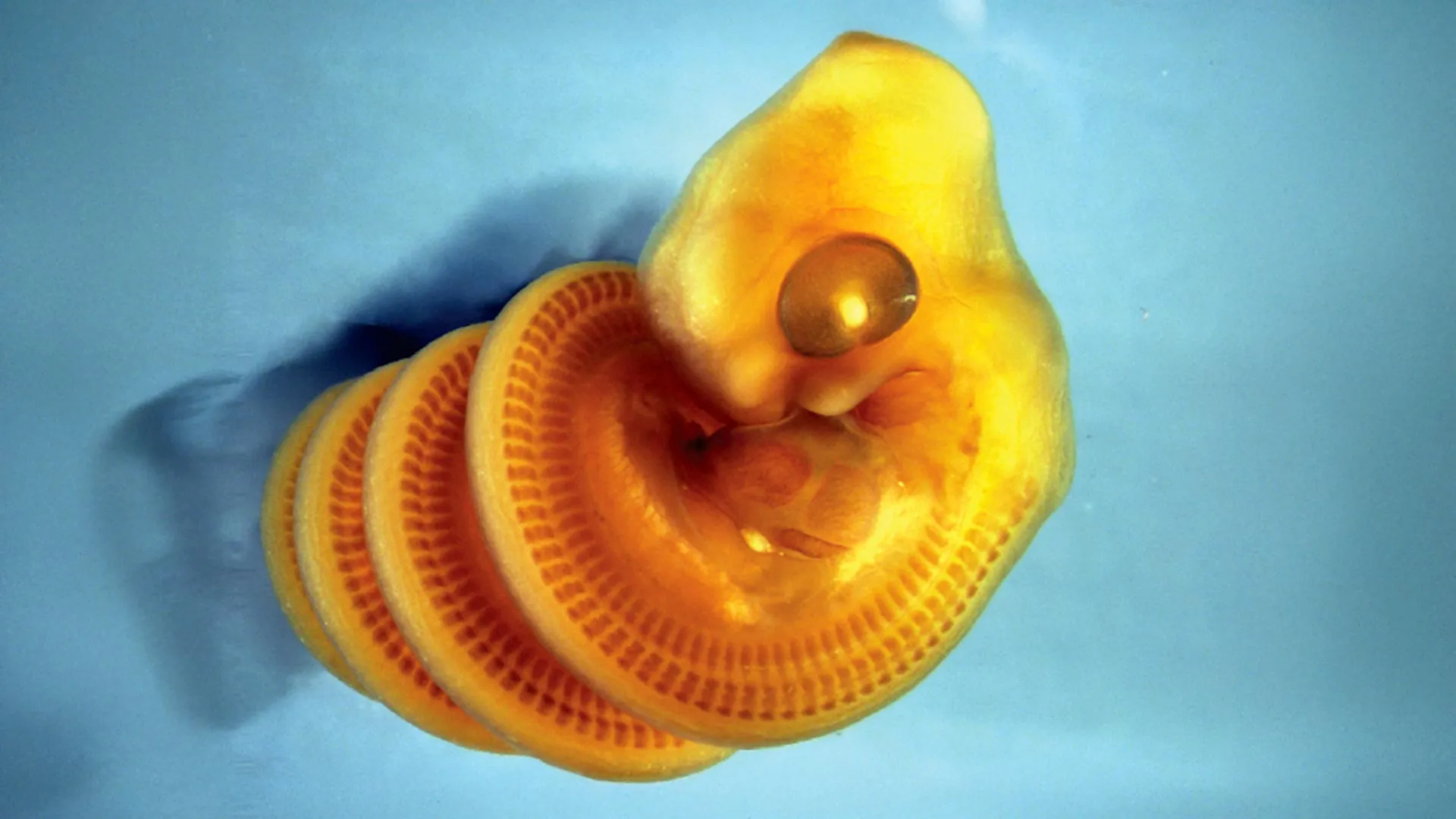
Snake embryos begin development in a striking position: curled into tight, usually right-handed spirals. Researchers now say they have identified a likely mechanical explanation for the unusual shape.
According to research reported by the Canadian Museum of Nature, the embryos’ bodies grow rapidly as they develop the elongated form characteristic of snakes. Their guts do not lengthen at the same rate. That difference creates a constraint, with the slower-growing gut acting as a tether while the body continues to extend.
The resulting force causes the body to buckle and twist into a coil inside the egg. The researchers’ findings were published in Current Biology.
The team first looked for a consistent pattern by examining images and records of more than 900 embryos representing 39 snake and other limbless squamate species. During the first weeks after the eggs were laid, the embryos consistently appeared to coil to the right when viewed from head to tail.
Because the embryos did not yet have developed muscles capable of moving them into position, the researchers suspected that their anatomy and growth were responsible for the early coiling. CT scans provided an important clue. The imaging showed a gut structure extending through the coiled body, surrounded by blood vessels connected to the yolk.
The researchers propose that the arrangement helps direct the growing body toward the side opposite the yolk. Since the yolk is positioned on the embryo’s left side, the initial coil forms to the right.
That pattern can change later. As the yolk shrinks and the embryo has more room to move, developing muscles allow it to shift position. The researchers reported that near hatching, some embryos remain right-handed while others coil to the left.
The study began with a question about whether snake embryos show a consistent “handedness” in their coiling. The researchers say the result offers a physical model for how spiral forms can arise during development, although they described further work as necessary to determine whether a similar mechanism applies to other spiral structures in living organisms.
/https://tf-cmsv2-smithsonianmag-media.s3.amazonaws.com/filer_public/b8/5e/b85ec0c4-468f-4a60-9021-4a6d41a63e39/alfie-bailey.png)