
Daily Weird News Report
LandSpace’s Zhuque-3 rocket achieved one major goal on its debut flight in December 2025: reaching orbit. Its attempt to recover the first-stage booster, however, ended in a fiery crash near the planned landing site.
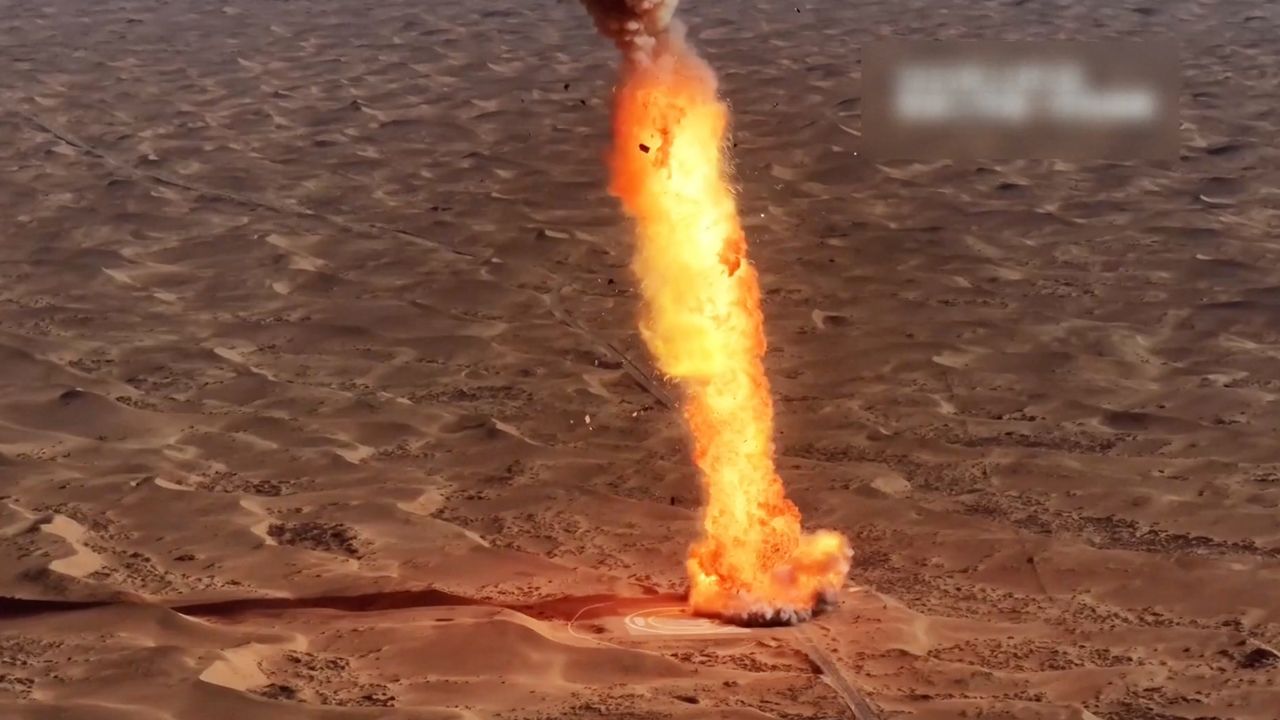
New footage released by China Central Television on Aug. 20 shows the failed landing attempt from several angles, including a camera mounted on the booster. In the onboard view, the ground rapidly approaches through the rocket’s metal grid fins, which help control its position during descent.
The video also indicates that the booster was already in serious trouble before reaching the ground. A small explosion occurred during its descent, and the first stage appeared to be engulfed in flames when it reached the area around the landing pad. CCTV footage shows the booster’s final impact as a large fireball.
The Zhuque-3’s debut mission took place on Dec. 3, 2025. The 216-foot (66-meter) rocket successfully delivered its payload to orbit, but its first stage did not complete the planned return and landing.
LandSpace’s next Zhuque-3 flight, on Aug. 18, succeeded on both fronts. The rocket placed a satellite into orbit, and its first stage landed safely. According to Space.com, that touchdown made it the first successful landing by a private Chinese orbital rocket.
It was also only the second reported landing by a Chinese orbital rocket of any kind. The first involved the initial stage of a Long March 10B rocket, which landed on July 10 in a net-like system mounted on a ship at sea.
The newly released recording offers a close view of the failure that preceded LandSpace’s successful recovery. It also shows how the company’s approach to rocket reuse involves a booster returning through the atmosphere under active control before attempting a precision landing.


/https://tf-cmsv2-smithsonianmag-media.s3.amazonaws.com/filer_public/f0/fe/f0fe19e4-e68b-474d-b0a4-19c5beb9d19d/speedy-star.webp)