Daily Weird News Report
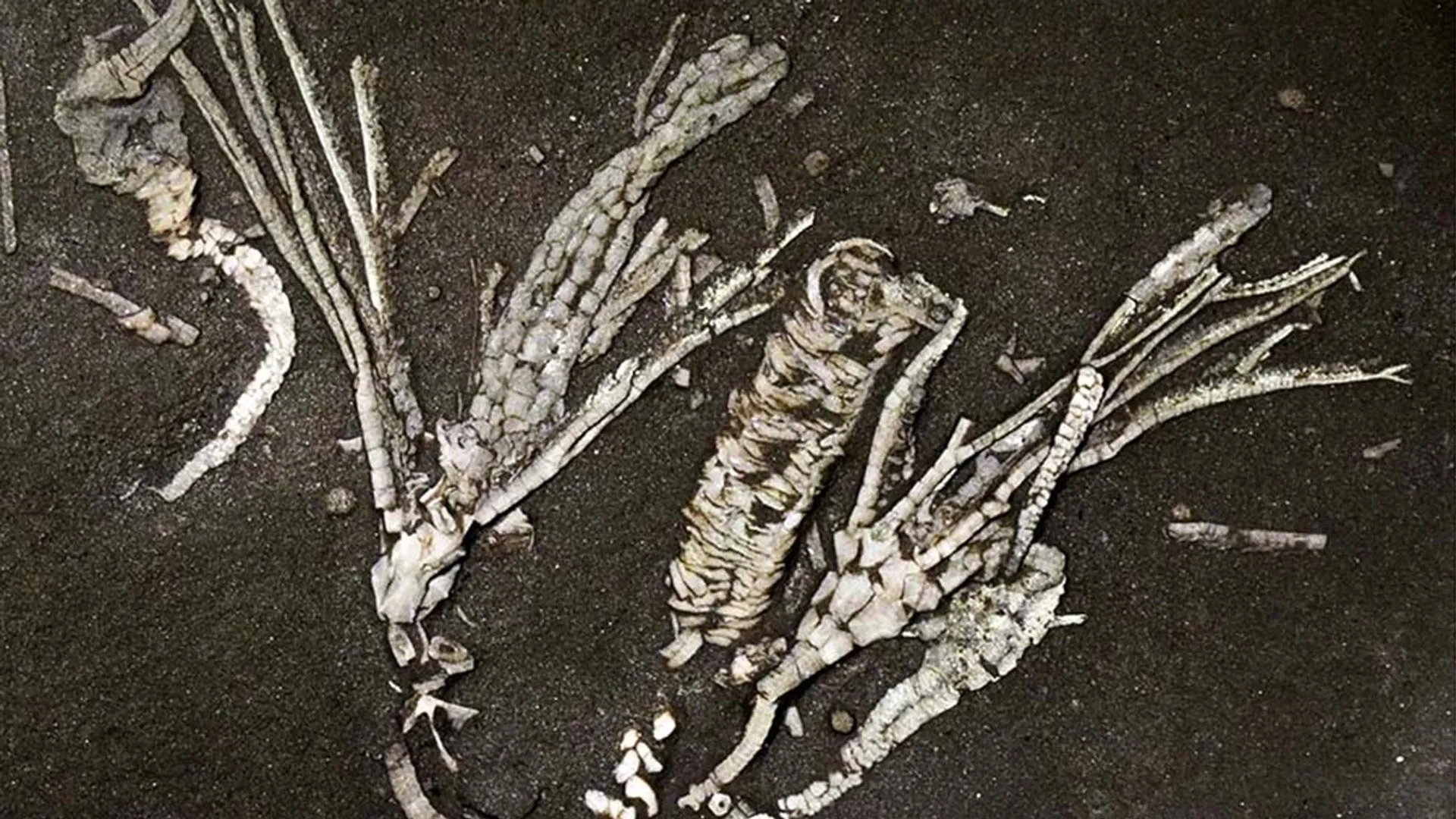
A fossilized sea creature has retained parts of its soft anatomy for more than 450 million years—an exceptionally rare occurrence in the fossil record.
The specimen belonged to Dendrocrinus simcoensis, an extinct crinoid that lived in early reef ecosystems long before dinosaurs appeared. Crinoids were marine animals related to modern starfish and often had flower-like bodies attached to stalks.
According to research described by the University of Oklahoma and reported by ScienceDaily, the fossil preserves the animal’s tube feet. In living crinoids, these delicate structures help with feeding, responding to water currents and occupying different ecological niches. Their form, spacing and size can provide clues about how an animal lived and obtained food.
The researchers compared the fossilized tube feet with those of modern crinoids and found significant anatomical differences. They say those differences offer evidence about how crinoid feeding strategies and body structures changed over hundreds of millions of years, while also providing information about early Paleozoic marine ecosystems.
Soft tissues such as skin, eyes and internal organs usually decay before fossilization. Most fossils therefore preserve harder structures, including shells, bones or skeletal plates. The Oklahoma researchers described this specimen as only the second known crinoid fossil with preserved soft tissue, despite the existence of millions of crinoid fossils. They identified it as the oldest example discovered so far.
The fossil’s scientific importance was not recognized during a new expedition. It had been kept for years in the collection of Montréal’s Musée de paléontologie et de l’évolution, a small museum supported by community donations. Paleontologists Lena Cole and David Wright examined it during a research visit and recognized the preserved structures.
The finding also illustrates how museum collections can produce discoveries long after specimens are collected. The researchers said new technology, ideas or expertise can reveal significance in fossils that have remained stored and cataloged for years.
/https://tf-cmsv2-smithsonianmag-media.s3.amazonaws.com/filer_public/cc/a5/cca51174-4295-4234-b8d2-eab719894c73/screenshot_2026-08-24_at_171648.png)