Daily Weird News Report
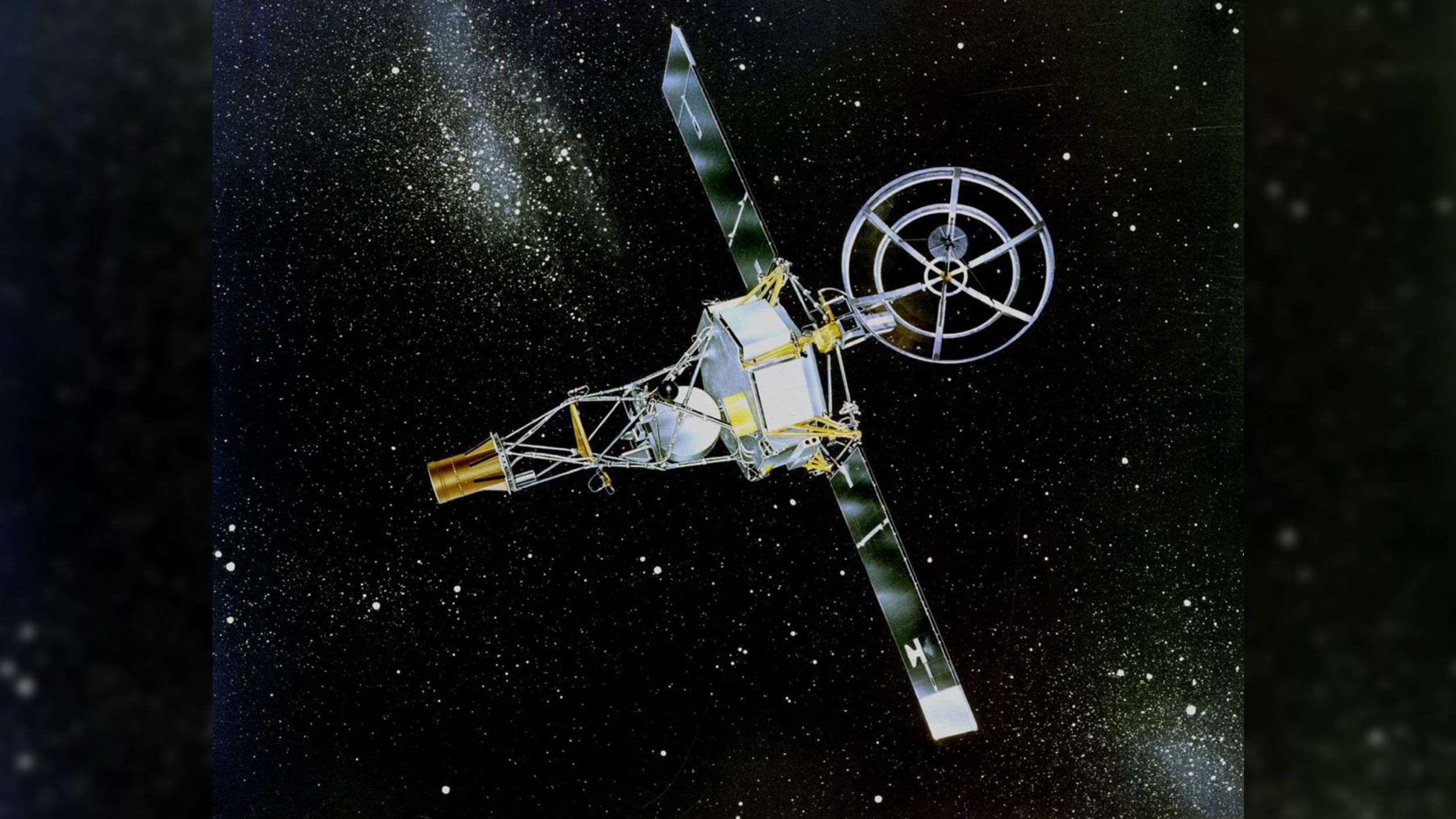
Eight days after leaving Earth, NASA’s Mariner 2 performed a maneuver that helped transform an imperfect launch into a historic planetary mission.
On Sept. 4, 1962, the spacecraft fired its engines about 1.5 million miles (2.4 million kilometers) from Earth. The brief mid-course correction was the first rocket maneuver conducted in deep space, according to Space.com’s account of the mission.
Mariner 2 had launched on Aug. 27 aboard an Atlas-Agena rocket. Although the launch sent the probe toward Venus, it was not accurate enough to place the spacecraft on a successful flyby path. Without a correction, Mariner 2 would have passed roughly 238,600 miles (384,000 kilometers) from Venus’ center and continued into space.
Mission control sent five commands to carry out the adjustment. The sequence instructed Mariner 2 to roll, pitch, turn and ignite its motor. The spacecraft rolled about 9.33 degrees and pitched approximately 139.83 degrees, positioning its engine to fire in the necessary direction. The full process took as long as 36 minutes.
The maneuver placed Mariner 2 on a much closer course, bringing its planned flyby distance to about 21,607 miles (34,773 kilometers). One hundred days later, the spacecraft passed Venus and became the first probe to successfully fly by another planet.
At the time, reaching another world with a spacecraft was still an uncertain undertaking. Today, mid-course corrections are a standard feature of interplanetary mission planning, although they remain crucial because a mission can depend on their success. Later missions used increasingly complex trajectory changes, including gravity-assist flybys that helped NASA’s Voyager 2 visit Jupiter, Saturn, Uranus and Neptune.
Mariner 2’s correction was an early demonstration that a spacecraft could be guided across deep space after launch—and still arrive at another planet.