
Daily Weird News Report
A large circular enclosure discovered at Chleby in the Central Bohemian Region of the Czech Republic may have served as a ritual and astronomical center for Neolithic farming communities, according to reporting by Live Science and Archaeology Magazine.
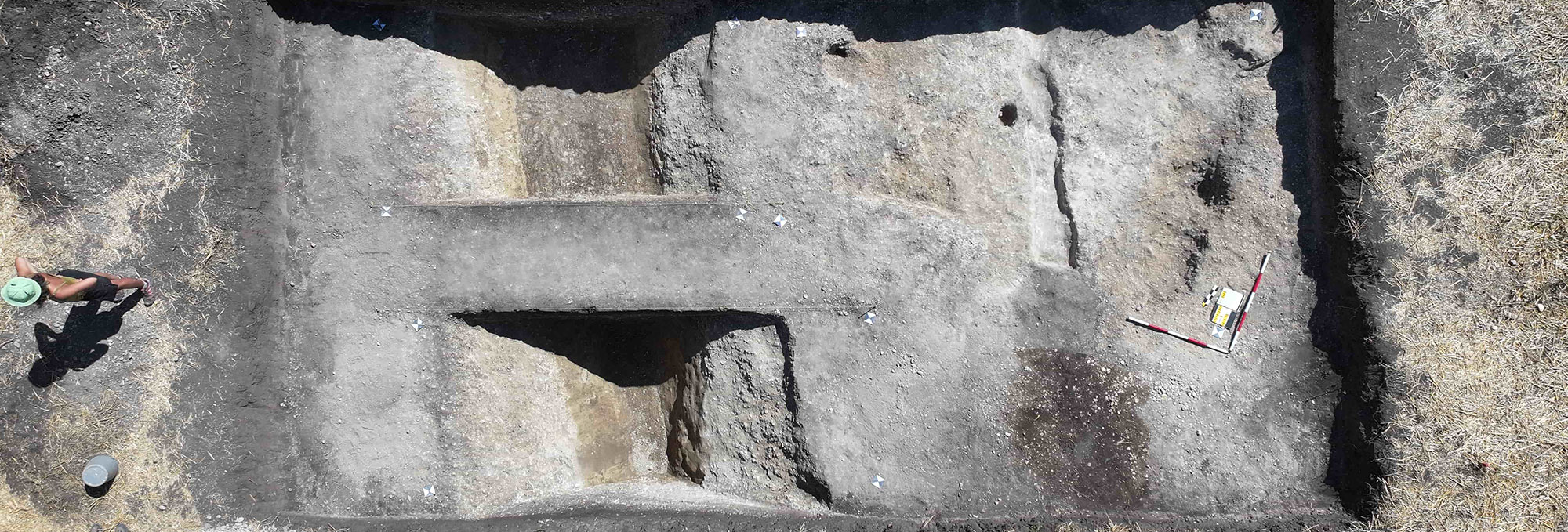
The monument was built approximately 6,500 years ago, making it around 1,000 years older than Stonehenge. It consists of a ditch measuring more than 750 feet, or about 230 meters, across and more than eight feet, or 2.5 meters, deep. Archaeologists believe wooden posts may once have formed the enclosure’s walls.
Twelve openings were positioned around the perimeter. Researchers led by Petr Krištuf of the University of West Bohemia say their arrangement was deliberate rather than random. The entrances appear to have aligned with significant points in the cycles of the sun and moon, including sunrise at the summer solstice and sunset at the winter solstice.
The layout also allowed people inside the enclosure to observe the moon at an extreme position on the horizon during its 18.6-year cycle. Archaeology Magazine reported that researchers identified two principal observation points connected with lunar rising and setting, as well as the solstitial alignments.
The structure’s precise purpose remains a matter of archaeological interpretation. Researchers describe it as a likely ritual center and suggest that its astronomical alignments could have helped mark ceremonial events and aspects of the farming calendar. Krištuf compared the arrangement with the main axis of Stonehenge, while noting that the Czech monument predates it.
Evidence also points to possible bull symbolism. Live Science reported that animal bones found in the ditch led experts to suspect that some entrances may have been decorated with bull skulls and horns. Archaeology Magazine likewise described bull skulls and horns as part of the evidence associated with ceremonial activity at the site. According to archaeologist Jan Turek, bulls were important religious symbols among some early European farming communities and may have represented strength and fertility.
The site continued to be used or occupied in later periods, although its original function appears to have changed. Earlier excavations uncovered burials of 18 people belonging to the Bronze Age Únětice culture, which existed roughly between 2300 and 1600 B.C. By the Iron Age, dated in the supplied reports to approximately 800 B.C. to 1 B.C., a settlement had been built over the monument. The ditch was gradually filled, and the enclosure seems to have lost its earlier significance.
Researchers plan to study the soil for chemical traces left by past human activity. They hope this analysis will clarify how the unusual site was used during different periods of prehistory.

/https://tf-cmsv2-smithsonianmag-media.s3.amazonaws.com/filer_public/be/c4/bec43377-d59c-470f-893e-8f099a020aee/dji_0444.jpg)