/https://tf-cmsv2-smithsonianmag-media.s3.amazonaws.com/filer_public/be/c4/bec43377-d59c-470f-893e-8f099a020aee/dji_0444.jpg)
Daily Weird News Report
A human skeleton has been discovered inside an unusual stone-lined structure in the Scottish Highlands, leaving archaeologists with more questions than answers about the feature and its final use.
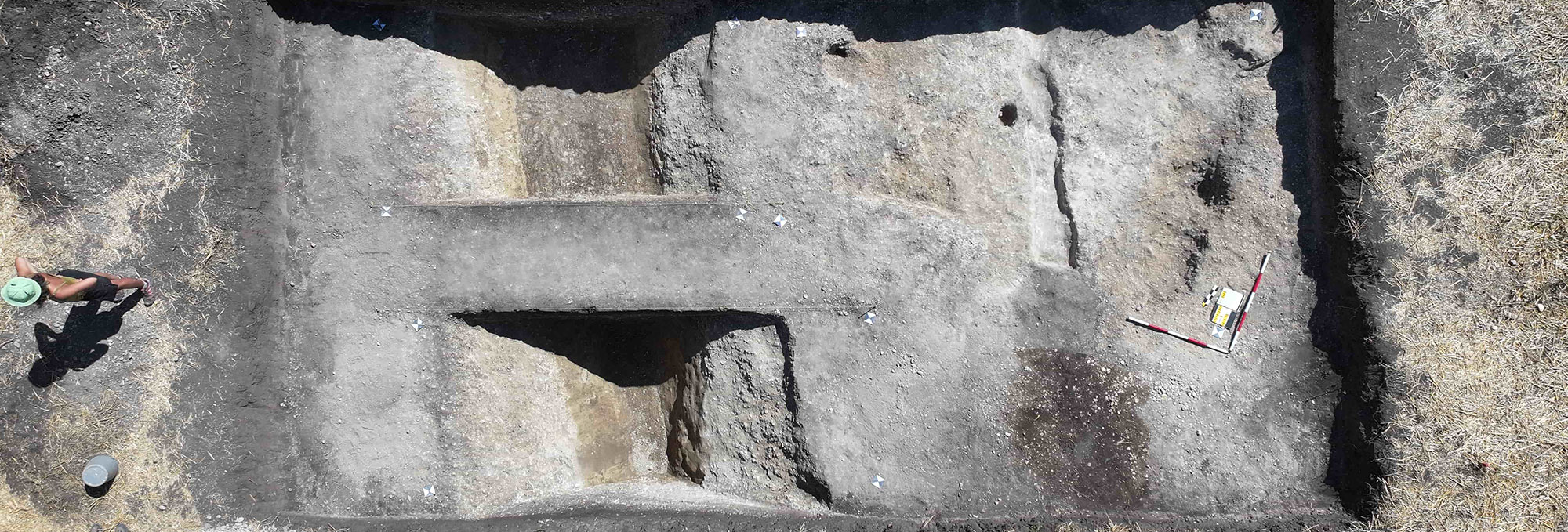
The discovery was made by Highland Archaeology Services during work ahead of a quarry expansion near Dornoch, about 200 miles north of Edinburgh. After the topsoil was removed, archaeologists found a ring of stones surrounding an oval depression roughly 10 feet long, 6.5 feet wide and 3 feet deep.
The structure had a slabbed floor, steep steps and walls made from carefully fitted stones. Some of the lower stones were bonded with a clay-like substance that may have helped the feature retain liquid. However, its small size, narrow entrance and staircase make a simple water-storage explanation difficult to establish.
Inside were the human remains, animal bones, charcoal and pieces of burnt wood. Excavators also recovered a broken soapstone bowl and part of a shale bangle. Nearby pits and postholes may be the remains of roundhouses, helping archaeologists tentatively place the site in the Iron Age.
Researchers have considered several possible functions. The sunken structure could have been a souterrain—an underground space used for storage or concealment—or part of an aboveground roundhouse. It may also have been a ritual well. Highland Archaeology Services co-director Lachlan McKeggie said experts consulted about the feature had not identified anything exactly like it.
The skeleton is currently described as probably belonging to an adult woman. It was found partly on deposits that had already filled the structure, suggesting the person may have been placed there while the pit was being filled. One possibility is that the burial formed part of a ritual event marking the structure’s closure. Another is that the feature had already been abandoned and was later used as a place to deposit the body.
Further analysis may provide information about the individual’s age, biological sex and health, although researchers say it may not reveal how the person died. The archaeological team has documented and excavated the site, with additional post-excavation work planned. The finds may eventually be assigned to a local museum through Scotland’s Treasure Trove system.
Iron Age burials are relatively uncommon in northern Scotland, where acidic soils often damage ancient human remains. The discovery occurred about a mile from Camore Wood, a prehistoric settlement with evidence of Bronze Age and Iron Age occupation, but no connection between the sites has been established.