Daily Weird News Report
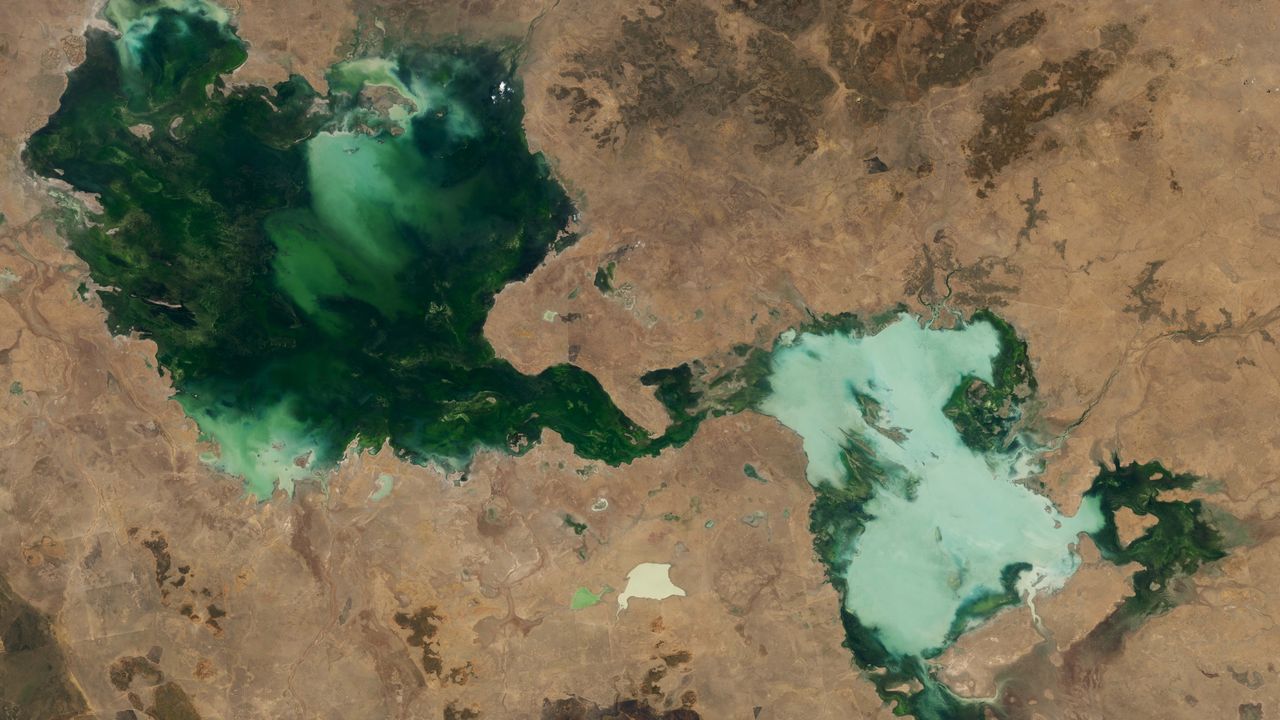
A satellite image taken over Australia’s Northern Territory shows four normally separate lakes joined into one broad, green-hued body of water after two unusually wet rainy seasons.
The lakes sit on the Barkly Tableland, where Tarrabool Lake forms the largest section of the merged water system. At its widest, Tarrabool stretches about 90 kilometers. Lake Sylvester, Lake Corella and Lake Deburgh make up the paler section to the east.
Live Science reported that the image was collected by Landsat 8 on Oct. 30, 2024. The dark green color around Tarrabool is attributed to dense vegetation and algae. The lighter, chalkier appearance of the other lakes is likely linked to suspended sediment stirred up when the lakes overflowed and mixed with surrounding dust and topsoil.
These are ephemeral lakes, meaning they do not have permanent inflows or outflows. During extended sunny periods, they can almost entirely disappear as water evaporates. Heavy rain refills their basins.
In this case, the lakes did not dry out during the two years before the image was taken. Satellite imagery from 2022 to 2024 showed them growing substantially as water accumulated from successive rainy seasons. NASA’s Earth Observatory reported that both the 2022–2023 and 2023–2024 rainy seasons ranked among the 10 wettest in the region since 1990.
Tropical Cyclone Megan added to the flooding in March 2024. ABC News previously reported that fish were seen swimming across a nearby road after the resulting flash floods.
The broader wet conditions occurred alongside a reported long-term increase in annual rainfall across the Barkly Tableland. The Australian Bureau of Meteorology found that rainfall rose by about 14% between 1989 and 2018; Live Science reported that this trend is likely related to human-caused climate change.
The expanded lakes also have ecological importance. Tarrabool Lake and Lake Sylvester are breeding locations for birds including straw-necked ibises and Australian pelicans, and both are listed by BirdLife International as important bird areas. When Tarrabool reaches its fullest extent, it can also flood the nearby Eva Downs Swamp system, forming Australia’s largest wooded swamp.