Daily Weird News Report
A burial discovered beneath or near a Roman-period cemetery in southwestern Poland has revealed an unusual Stone Age funeral assemblage: an adult man laid to rest with a tooth necklace, a stone battle ax, amber beads, a flint blade and the remains of two human skulls.
According to Live Science, archaeologists initially believed they had found another feature associated with the Roman cemetery. The serpentinite ax, however, indicated that the grave was considerably older. Its style places the burial around 2900 B.C., during the Middle Neolithic period, roughly 3,000 years before the Roman-era cemetery.
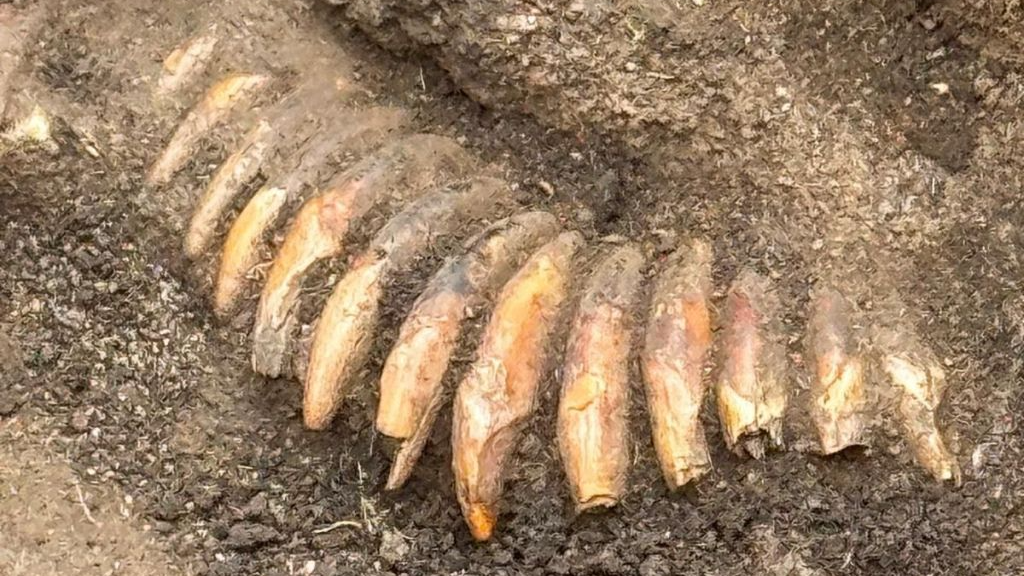
The necklace was made from 42 mammal teeth. Each tooth had a hole drilled through its root, and the pieces had been arranged carefully, suggesting they had been strung together. The teeth included incisors and canines from large mammals such as wolves, deer and bears. Researcher Paweł Dąbrowski also said that some could potentially be human, although the account did not establish their identities.
The grave contained an ax beneath the man’s right elbow, along with amber beads and a flint blade. The combination of objects led Dąbrowski to suggest that the buried individual may have been a warrior or hunter, or someone of elevated status such as a family-clan leader. Those interpretations remain possibilities rather than confirmed identifications.
The two skulls make the burial particularly unusual. Archaeologists believe they may represent decapitated heads placed in the grave as offerings, but additional examination is required to determine whether decapitation occurred.
A similar nearby burial contained axes, flint tools, amber beads and calf bones that may indicate an animal sacrifice. Researchers said the two graves are currently the only known burials of their kind in the area and may be associated with the Corded Ware culture.
The next stage of the investigation will involve analyzing remains from both burials to determine whether the individuals were related and to learn more about their lives. Initial results were expected later in 2026, according to the report.