Daily Weird News Report
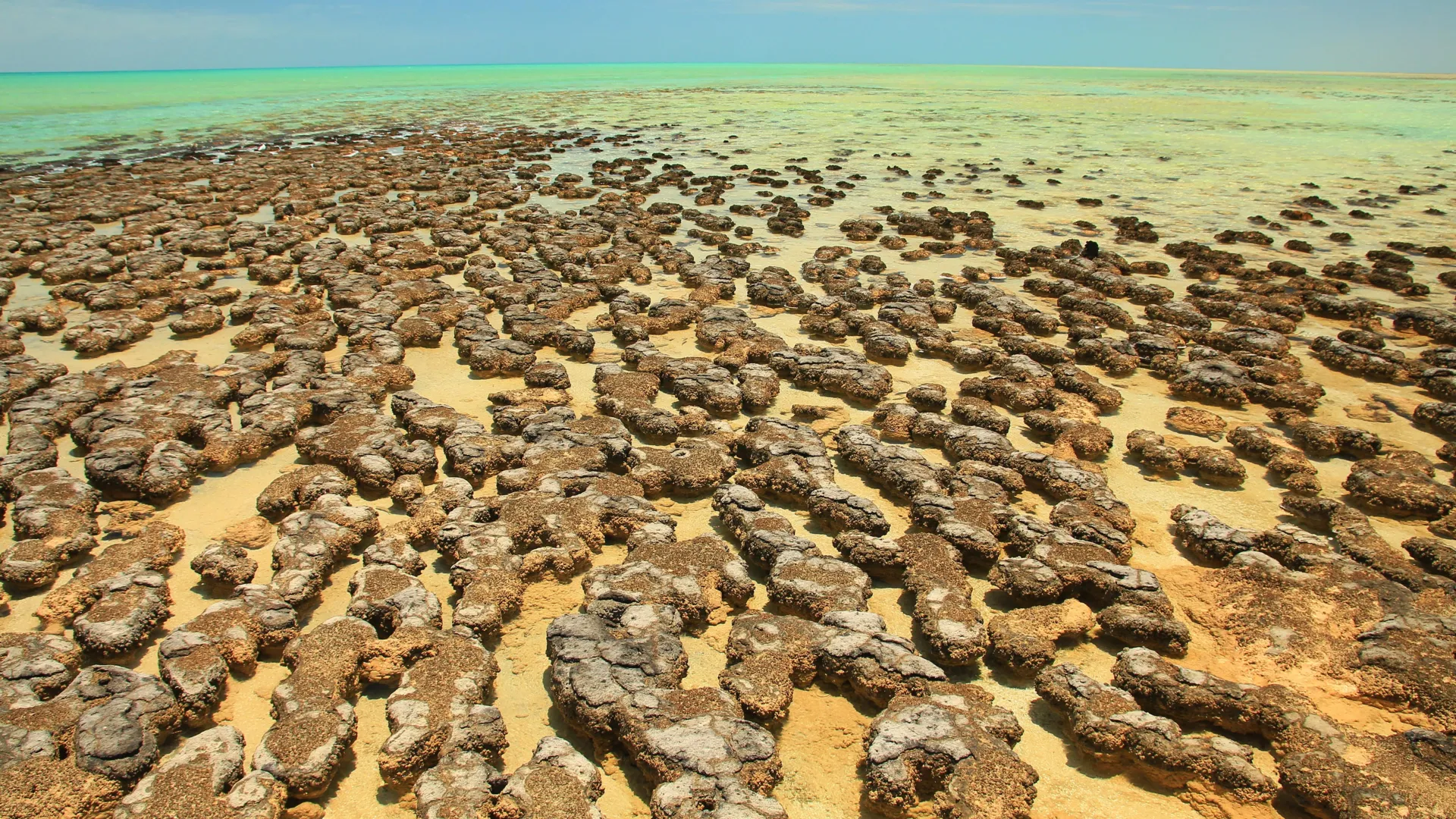
A microbe found inside Western Australia’s modern stromatolite communities has given researchers an unusually close look at how simple cells may have begun cooperating billions of years ago.
The organism, named Nerearchaeum marumarumayae, belongs to the Asgard archaea, a group considered closely related to the ancestors of eukaryotes—the complex cells found in plants, animals and humans. Researchers from the University of New South Wales, the University of Technology Sydney and the University of Melbourne studied samples from Shark Bay, where stromatolites and microbial mats still form today.
Using electron cryotomography, a high-resolution three-dimensional imaging technique, the team captured what the research organization describes as the first direct images of an Asgard archaeon physically interacting with a bacterium. The organisms were joined by extremely thin, tube-like structures called nanotubes.
The microbes also appeared to produce substances that could benefit one another, including vitamins, nutrients and hydrogen. The archaeon was observed producing chains of budded vesicles and other elaborate tube-like structures. Researchers interpret these findings as evidence of a close biological partnership, but the study does not show that this particular relationship directly became the first complex cell.
One leading evolutionary idea proposes that an ancient archaeon and a bacterium formed an intimate partnership in which one eventually engulfed the other. Over time, that relationship is thought to have produced mitochondria, the energy-producing structures inside complex cells. Scientists have had limited direct evidence of what such an early partnership might have looked like.
The research team spent four or five years trying to grow the organisms in the laboratory. The Asgard archaeon could not be cultivated alone, which researchers say may indicate that it depends on other organisms to survive. Genetic sequencing first confirmed that the organisms were present in the collected samples.
The team also used deep learning to predict protein structures, allowing researchers to examine possible ancient forms of cellular machinery associated with complex life.
The microbe’s name combines a reference to Nereus, an ancient Greek sea god, with a Malgana word meaning “ancient home.” Researchers consulted Malgana language expert Kymberly Oakley and Malgana elders before including the language in the scientific name. Shark Bay is both a site of scientific interest and a place of continuing Indigenous cultural heritage.