Daily Weird News Report
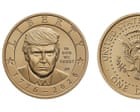
A new one-dollar coin bearing Donald Trump’s face is entering circulation with an unusual complication: its legal status is being debated even as the U.S. government sells it to the public.
The coin has a face value of $1 but costs roughly $2.44 to purchase. The U.S. Mint is producing about 9 million of them, and a package of 25 costs $61. Although it has a gold-like appearance, the coin is made from zinc, manganese, nickel and copper.
The design is at odds with a long-standing American practice of keeping living people off the nation’s currency. According to reporting by The Guardian, that tradition dates to the late 18th century, when George Washington rejected a proposal to put his likeness on U.S. money because he considered it too similar to monarchies placing rulers on currency.
Congress later enacted a restriction in 1866 barring the portrait or likeness of a living person from appearing on currency. The measure followed an episode involving Spencer C. Clark, a Treasury official who arranged for his own image to appear on a five-cent note after an image of the deceased explorer William Clark had been planned. The law applied to paper money, however, leaving questions about how it governs coins.
Treasury Secretary Scott Bessent has defended the Trump coin by pointing to a commemorative coin featuring President Calvin Coolidge that was issued during the 150th anniversary of American independence. The Trump coin is intended to mark the country’s 250th anniversary and, according to the Mint, to honor “250 years of great American heritage.”
Gabriel Mathy, an American University economics professor who has studied U.S. currency, told The Guardian that he would consider the coin illegal, while also saying that the relevant laws function more like norms because they are difficult to enforce.
The coin has faced opposition. Democratic members of Congress urged the Treasury Department in May to stop the project, citing a 2005 law concerning which presidents may appear on coins. Separately, retired attorney James Rickher sought to block its issuance. A federal judge denied that request in June, finding that Rickher had not shown he would personally suffer concrete harm. The judge specifically did not decide whether the coin itself was legal or illegal.
For now, the coin is available as legal tender, even as the question of whether it should have been issued remains unresolved.
/https://tf-cmsv2-smithsonianmag-media.s3.amazonaws.com/filer_public/32/32/3232b726-b4f1-43c1-98c6-7cdefc6b9ff4/sugar.jpg)