
Daily Weird News Report
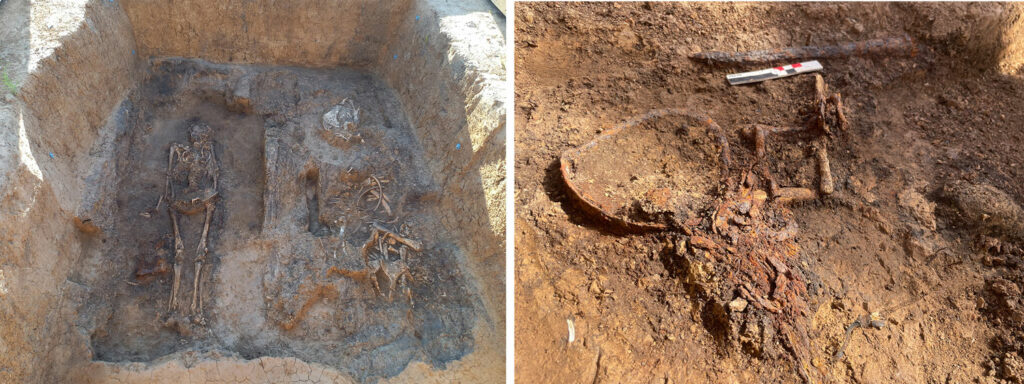
A tenth-century wooden burial chamber discovered at the Gnezdilovo cemetery in western Russia contained the remains of a man, a horse and a dog, according to reporting cited by Archaeology Magazine from Live Science.
Researchers from the Russian Academy of Sciences found the burial chamber at the medieval cemetery near Suzdal. The man was estimated to have been between 25 and 35 years old when he died. The chamber measured approximately 10 feet long and 9 feet wide, although its roof had collapsed.
The burial included objects associated with clothing, combat and horsemanship. Among the finds were a silver horseshoe-shaped brooch that had fastened a garment at the man’s neck, an iron knife, stirrups and other horse-related equipment, a bone comb and a battle ax. The reported material also identifies a spearhead among the weapons and equestrian items recovered from the grave.
The arrangement is notable because it appears to combine the burial of a person with that of animals and the inclusion of military and riding gear. Archaeology Magazine reports that this style of burial may indicate that the settlement at Suzdal had developed into a Rus administrative center.
Beginning in the late ninth century, the region was ruled by the Kievan Rus, a polity that included people from the Baltic, eastern Slavic communities and Norse groups from Scandinavia. The burial practice has been interpreted as suggesting that a member of the local Old Russian nobility adopted a Scandinavian funerary tradition.
The discovery does not establish the man’s identity, and the supplied report does not state how he died. It does, however, provide evidence of a burial in which status, weapons, horsemanship and cultural connections may all have been represented through the objects and companions placed in the chamber.

/https://tf-cmsv2-smithsonianmag-media.s3.amazonaws.com/filer_public/5e/8e/5e8ec5ec-bf1c-4f6c-b604-7e1ed6692863/island-archives-manuscript-21-of-25-1920x1280.jpg)