Daily Weird News Report
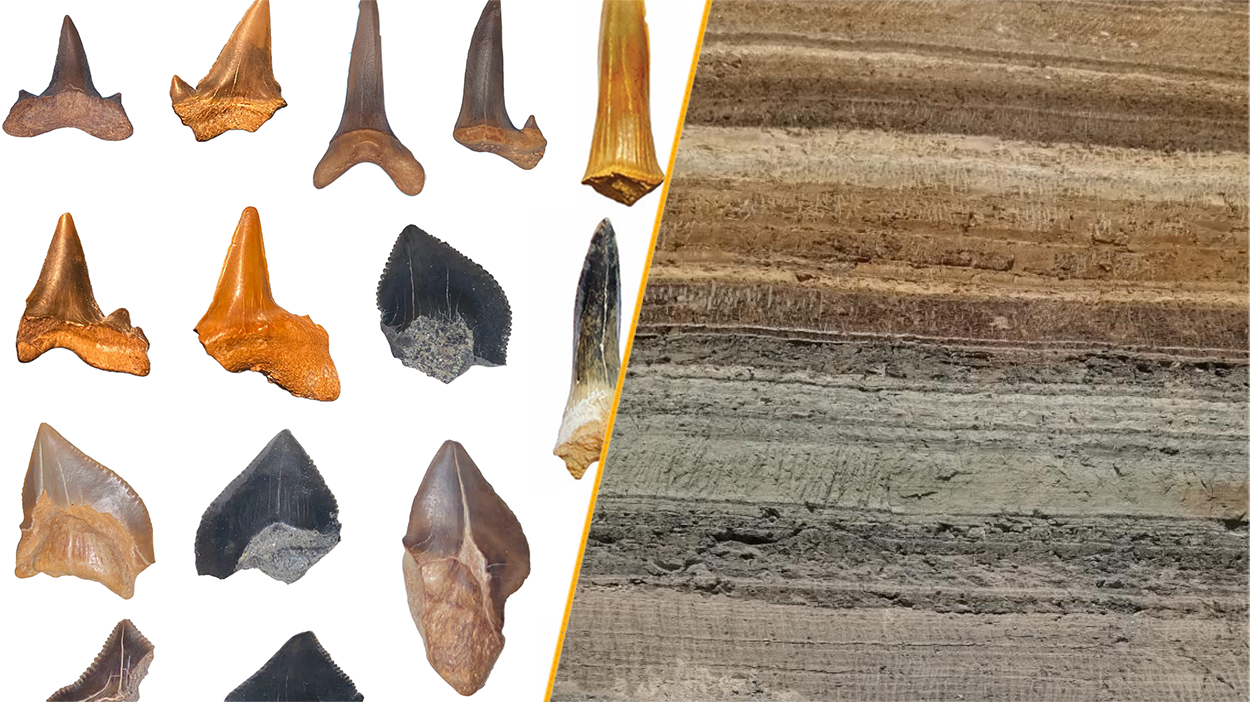
A stretch of Egypt’s Western Desert has revealed evidence of a much wetter and more crowded past: fossilized teeth from at least seven shark species were found on the Abu-Tartur Plateau between 2020 and 2022.
The discovery was described in a study published Aug. 18 in the journal Cretaceous Research. Researchers examined 14 teeth recovered during expeditions, adding to earlier finds of teeth from two types of mackerel shark. Together, the fossils represent an ancient shark assemblage dating to the Late Cretaceous, millions of years ago.
According to study first author Tarek Yassin, a paleontologist at Cairo University, the area was once a sea with conditions that supported abundant marine life. During the Cretaceous period, global temperatures were generally higher and sea levels were as much as 170 meters above present levels. Shallow seas consequently extended into regions that are now desert.
The Abu-Tartur Plateau lies within the Duwi Formation, a geological formation spanning parts of Egypt’s Eastern and Western deserts. Earlier work in the region had uncovered fossils of fish, sea turtles and other marine reptiles. The rocks also contain extensive phosphorite deposits, which can form from the shells and bones of marine animals.
One of the newly identified sharks, Scapanorhynchus raphiodon, was an ancient relative of today’s goblin sharks and had not previously been reported in Africa. Two others, Serratolamna serrata and Squalicorax bassanii, had not previously been documented in Egypt.
The concentration of teeth in one location suggests that the region once supported a complex ecosystem rich enough to sustain numerous shark species and their prey. However, the researchers cautioned that the fossils do not prove all seven species lived there at the same time. Their remains could have accumulated and become mixed within the sediment over a longer period.
The research team plans to continue examining the plateau and nearby areas, where it expects additional fossils may remain undiscovered.

/https://tf-cmsv2-smithsonianmag-media.s3.amazonaws.com/filer_public/8e/6b/8e6b5a8f-601b-4e36-96df-dc9ed1e2e717/padlock2.png)